When you're looking into more efficient ways to water your crops, you might wanna check out the Self Priming Irrigation Pump. These pumps are pretty handy because they don’t require you to prime them manually every time—you get to save some effort. Lots of farmers and gardeners are really into these because they’re easy to use and kind of hassle-free.
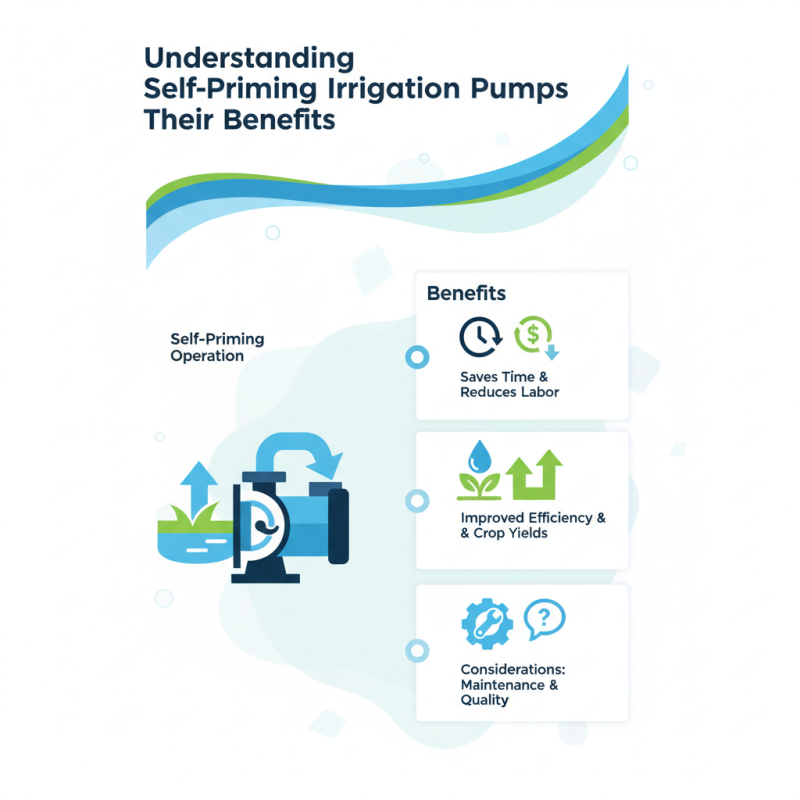
But honestly, the perks don’t stop there. A big plus is that they save you time and cut down on labor costs. Just imagine not having to mess around with priming it every single time you turn it on—that’s a game-changer for efficient irrigation. Still, it’s a good idea to know your specific needs before choosing one. Not all pumps are the same!
Some folks have run into maintenance hiccups down the line, and sometimes, not all pumps live up to their promises. That’s why it's worth investing a bit more in a trusted brand—sometimes a high-quality option really makes all the difference. At the end of the day, making a smart choice can help you get better crop yields and keep your water and resources in check.
Self-priming irrigation pumps are essential in modern gardening and agricultural practices. They are designed to draw water from a source without manual intervention. This feature makes them popular among DIY gardeners and farmers alike. The working principle relies on a unique mechanism that allows the pump to fill itself with water. As a result, users save time and effort.
China Self Priming Irrigation Pumpmodels are increasingly finding their way into various systems. They offer users efficiency and reliability, especially in remote areas with limited water access. A well-functioning Self-Priming Pump saves energy, which reduces operational costs. However, like any technology, these pumps can face challenges. Inconsistent priming or air leaks can disrupt water flow, leading to frustration.
Maintaining these pumps is crucial. Regular checks can prevent many operational issues. Users often neglect simple maintenance steps, thinking everything is fine. It's essential to monitor the pump's performance closely. Adequate knowledge about the equipment can help users maximize its benefits. Balancing efficiency with proper maintenance will improve reliability in the long run.
Self-priming irrigation pumps are remarkable devices. They can efficiently draw water from a source, even when the source is lower than the pump. This unique feature makes them practical for various irrigation needs. But how do these pumps operate?
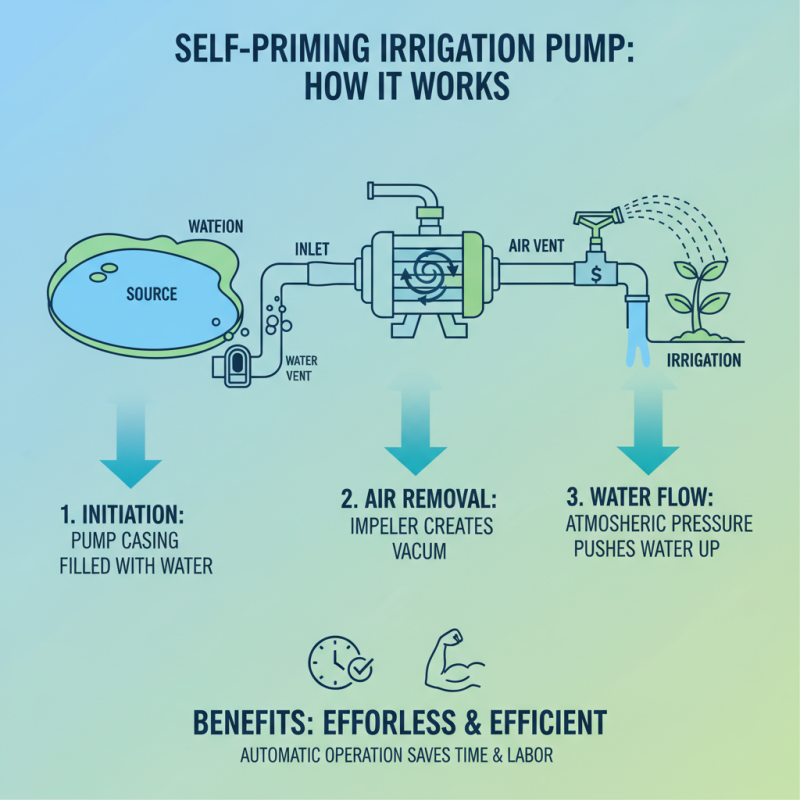
Self-priming pumps use a centrifugal design. They create a vacuum that helps pull water into the pump casing. The impeller spins rapidly, moving water through the system. Air mixed in the water is pushed out. This action primes the pump automatically. Unlike traditional pumps, they do not need manual priming. The convenience is clear: these pumps save time and effort.
Tip: Ensure the suction line is airtight. Any leaks can disrupt the priming process. Regular maintenance is crucial for optimal performance. Check for clogs frequently. A blocked filter affects efficiency.
Moreover, operating conditions matter. While self-priming pumps are versatile, extreme conditions can impact their performance. High temperatures or debris in the water can cause issues. Be cautious of the environment around the pump. Always position it correctly for the best results.
Tip: Test the pump regularly. Simple checks can prevent larger problems later. Trust your instincts; if something feels off, investigate immediately.
Self priming irrigation pumps are quite advantageous for modern agricultural practices. They offer benefits that can enhance efficiency and reduce downtime. According to recent data from the Irrigation Association, the implementation of these pumps can boost irrigation efficiency by over 30%. This efficiency can lead to significant savings in water usage, which is crucial in areas facing drought conditions.
One notable benefit of Self Priming Pumps is their ability to handle air entrainment. This means they can successfully operate even when the pump is partially filled with fluid. Many farmers find this feature especially important. It reduces the need for manual priming, saving both time and labor. Data from agricultural surveys indicate that minimizing manual interventions in irrigation can cut labor costs by up to 20%.
However, there are considerations to keep in mind. Not all self priming pumps perform equally under different conditions. For instance, their efficiency can drop in high-pressure situations or with dirty water. It's essential for farmers to assess their unique requirements and the specific environment where the pump will be used. Understanding these factors is crucial for maximizing the benefits of self priming irrigation pumps.
Self-priming irrigation pumps offer significant advantages in agricultural applications. These pumps can lift water from sources without needing manual priming. This feature is essential for farmers facing diverse irrigation challenges. According to industry reports, approximately 30% of farms have adopted self-priming pumps for enhanced efficiency. The flexibility of these pumps allows them to operate in varying conditions, making them ideal for different crop types.
Farmers using self-priming systems report improved water distribution. A study highlighted that farms experienced a 20% increase in yield due to better irrigation coverage. However, it raises questions about maintenance and potential failures. Some farmers find that neglecting regular maintenance leads to operational issues. Over time, this wear can diminish the pump's effectiveness. This reality underscores the need for diligent upkeep, even when using a cheap self-priming irrigation pump.
Additionally, the applications extend beyond just crop irrigation. They are useful in greenhouses and landscape irrigation. The rising demand for efficient equipment has led to more accessibility. But not all self-priming pumps perform equally. Farmers must research specifications and performance metrics to choose the right type for their needs. This diligence ensures optimal irrigation outcomes and resource savings.
Self-priming irrigation pumps are efficient tools for watering gardens and fields. Proper maintenance is crucial to ensure their longevity and functionality. Regular checks on the pump's seals and gaskets can prevent leaks. A small leak can lead to larger issues down the line.
Checking the intake strainer is essential. Clear debris often to maintain proper water flow. If the pump struggles to self-prime, consider cleaning the strainer regularly.
Additionally, it’s wise to inspect the motor and electrical components. Look for signs of wear, such as frayed wires. If something seems off, don't ignore it. Early interventions can save time and money. Maintenance is not just a chore; it’s a necessary practice for the optimal performance of your irrigation system.
Self-priming pumps have gained popularity in various agricultural settings. They offer unique advantages over traditional pumps. For example, self-priming pumps can draw water from deep sources without the need for priming. This feature simplifies operation and reduces labor costs for farmers. According to industry reports, adoption of self-priming systems has increased irrigation efficiency by up to 30% in drought-prone areas.
One major drawback of traditional pumps is their need for manual priming. This can sometimes be tedious and time-consuming. As a result, farmers may lose precious time, especially during peak irrigation seasons. In contrast, self-priming options have reduced setup times significantly. A recent study noted that 65% of irrigation managers prefer self-priming systems for their ease of use.
However, not all self-priming pumps are equal. Some may struggle with suction lift requirements under certain conditions. While many users benefit from their convenience, there's still room for improvement in performance consistency. Factories like the China Self Priming Irrigation Pump Factory are working on enhancing reliability and efficiency. Understanding these differences is essential for optimizing irrigation strategies.
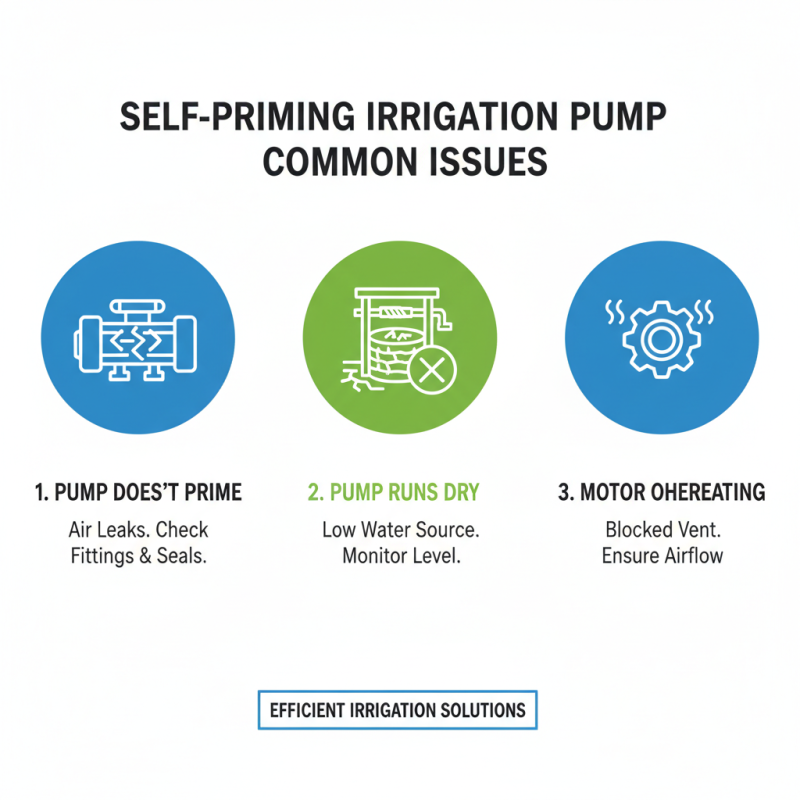
Self priming irrigation pumps are popular for their convenience. However, they can face common issues that users should be aware of. For instance, if a pump doesn’t prime, it often indicates air leaks in the system. Checking all fittings and seals is essential. Sometimes, the pump may run dry, leading to damage. Always ensure your water source is full.
Tips: Regular maintenance can help prevent these issues. Clean the pump and check for blockages regularly. It’s also important to inspect the suction line and fittings for any signs of wear. Replace any damaged parts immediately to avoid further complications.
Another frequent problem is uneven flow. This could be a sign of clogging or inconsistencies in the suction line. Ensure no debris is obstructing the intake. A thorough inspection can save time and money later. Lastly, understanding the specifications of your China Self Priming Irrigation Pump Product is crucial to maintain optimal performance. Recognizing these common problems can help users troubleshoot effectively.
: It is a device that draws water automatically from a source. This saves users time and effort.
They create a vacuum that pulls water into the pump. An impeller spins and pushes out air, priming automatically.
Regular checks are vital for performance. Users often ignore maintenance, which can lead to problems.
They can draw from deep sources without manual priming, reducing labor costs and setup time.
Some may struggle with suction lift in certain conditions, leading to inconsistent performance.
Traditional pumps need manual priming, which is time-consuming. Self-priming options are easier to use.
High temperatures, debris in the water, and air leaks can disrupt their operation.
Testing regularly prevents larger issues. If something seems off, it's important to investigate.
The pump's position and surrounding conditions impact its efficiency. Proper placement is crucial for best results.
Neglecting maintenance and ignoring performance changes can lead to frustration and inefficiency.
Self Priming Irrigation Pumps are specialized devices designed to efficiently move water in agricultural settings without the need for manual priming. These pumps operate by creating a vacuum that draws water into the pump, making them ideal for applications where the water source may be below the pump level. One of the primary advantages of self priming irrigation pumps is their ability to operate with minimal maintenance and reduced risk of air lock, leading to consistent and reliable performance.
In agriculture, self priming irrigation pumps are invaluable for various applications, from irrigation of crops to assisting with drainage systems. Proper maintenance, such as regular inspection of seals and filters, can prolong the life of these pumps. Additionally, understanding the differences between self priming pumps and traditional pumps helps users select the appropriate system for their specific needs. Addressing common issues through troubleshooting ensures optimal operation and efficiency of self priming irrigation pumps.